
Hydration is one of the most fundamental yet frequently overlooked aspects of feline health. Unlike dogs, who readily lap up water after an active session or a walk, domestic cats possess a uniquely low thirst drive. This physiological trait makes them especially vulnerable to silent, chronic dehydration. Over time, inadequate water intake can lead to severe health complications, including Feline Lower Urinary Tract Disease (FLUTD), painful urinary tract infections (UTIs), kidney stones, and Chronic Kidney Disease (CKD).
Understanding why cats are inherently reluctant to drink standing water, how their evolutionary history shapes their hydration needs, and how to effectively encourage them to drink more water is critical for every cat owner.
Table of Contents
The Evolutionary Origins of Feline Thirst
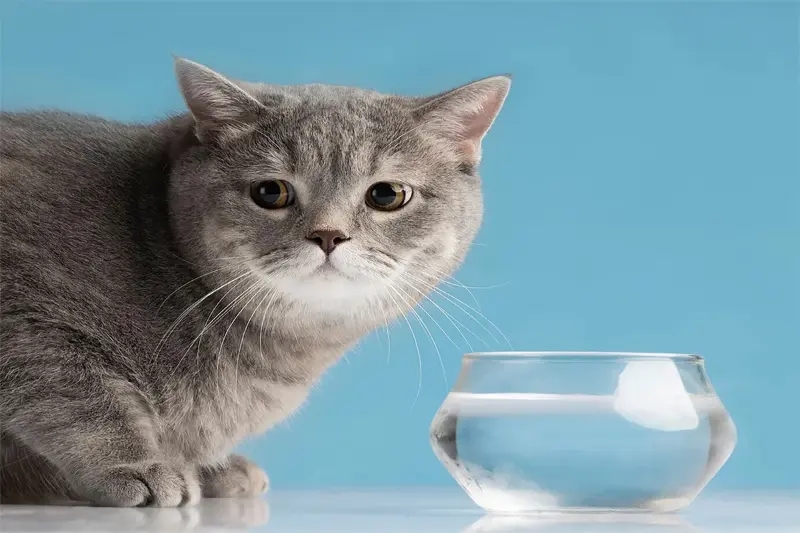
To understand why your cat ignores their water bowl, it helps to look at their ancestors. Domestic cats (Felis catus) are descendants of the African wildcat (Felis lybica), a small desert-dwelling predator.
Desert Adaptations and Low Thirst Drive
Because water sources were scarce in desert environments, African wildcats adapted to extract almost all their required moisture directly from their prey. A natural diet of small rodents, birds, and reptiles consists of roughly 70% to 75% water. Consequently, cats evolved a very weak thirst response—they simply did not evolve a biological trigger to drink water unless severely dehydrated.
The Modern Diet Misalignment
Today, many domestic cats live on a diet consisting primarily of dry kibble, which typically contains only 6% to 10% moisture. While dry food is convenient and shelf-stable, it creates a massive hydration deficit. A cat eating exclusively dry food must drink significantly more water to achieve the same level of baseline hydration as a cat eating canned wet food or a raw diet. Because their innate thirst drive remains low, kibble-fed cats often exist in a state of mild to moderate chronic dehydration.
Health Consequences of Feline Dehydration
When a cat does not consume enough water, their body compensates by concentrating their urine to conserve fluids. While this survival mechanism kept their wild ancestors alive in arid climates, long-term urine concentration places extreme stress on the feline renal and urinary systems.
       [Low Water Intake]
               │
               ▼
   [Concentrated Urine Production]
               │
   ┌───────────┴───────────┐
   ▼                       ▼
[Crystal & Stone Formation] [Renal Overwork & Toxicity Build-up]
   │                       │
   ▼                       ▼
[FLUTD / Blockages]     [Chronic Kidney Disease (CKD)]
Feline Lower Urinary Tract Disease (FLUTD)
FLUTD is a broad term used to describe several conditions affecting the cat’s bladder and urethra. Highly concentrated urine provides the ideal environment for microscopic mineral crystals—most commonly struvite and calcium oxalate—to form.
- Urethral Obstruction: In male cats, these crystals can combine with mucus to form a plug that completely blocks the narrow urethra. A urethral blockage is a life-threatening emergency; without immediate veterinary intervention, it can cause acute kidney failure or bladder rupture within 24 to 48 hours.
- Feline Idiopathic Cystitis (FIC): Concentrated urine irritates the delicate bladder lining, leading to painful inflammation, blood in the urine, and frequent, strained urination.
Chronic Kidney Disease (CKD)
The kidneys are responsible for filtering toxins, waste products, and excess minerals from the bloodstream. When a cat is chronically dehydrated, the kidneys must work significantly harder to filter toxins out of a reduced volume of fluid. Over years, this relentless overwork contributes to the irreversible loss of kidney function. CKD is one of the leading causes of illness and death in senior cats.
Constipation and Digestive Issues
Water is required to keep stool soft and moving smoothly through the gastrointestinal tract. Chronically dehydrated cats absorb excess moisture from their colon, resulting in dry, hard stools, painful defecation, and chronic constipation.
How Much Water Does a Cat Really Need?
Calculating your cat’s hydration needs depends on their body weight, age, activity level, and primary diet type.
The Standard Hydration Formula
As a general rule, a healthy adult cat requires approximately 40 to 60 milliliters of water per kilogram of body weight per day (roughly 3.5 to 4.5 ounces of water per 5 pounds of body weight).
| Cat Weight (lbs / kg) | Daily Water Requirement (Total) |
| 6 lbs (2.7 kg) | ~110–160 ml (3.7–5.4 oz) |
| 8 lbs (3.6 kg) | ~145–215 ml (4.9–7.2 oz) |
| 10 lbs (4.5 kg) | ~180–270 ml (6.0–9.0 oz) |
| 12 lbs (5.4 kg) | ~215–325 ml (7.2–11.0 oz) |
| 14 lbs (6.3 kg) | ~250–380 ml (8.4–12.8 oz) |
Note: If your cat eats wet food, a large portion of this daily requirement is met through their meals. If they eat dry kibble, virtually 100% of this fluid must come from active drinking.
Why Traditional Water Bowls Fail
If you leave a clean bowl of tap water out for your cat, you might notice they barely touch it—or prefer drinking from a dripping bathroom faucet instead. This preference is driven by clear evolutionary and sensory instincts:
Instincual Fear of Stagnant Water
In the wild, standing water is frequently contaminated with harmful bacteria, parasites, and decaying organic matter. Moving, running water—like a flowing stream—is instinctually perceived as cleaner and safer to drink.
Whisker Fatigue
Cats possess highly sensitive facial whiskers packed with nerve endings (proprioceptors). When a cat dips their head into a deep, narrow bowl, their whiskers rub against the sides, causing sensory overload known as “whisker fatigue.” To avoid this discomfort, many cats refuse to drink from deep or small bowls altogether.
Poor Depth Perception
Cats have exceptional motion-detection vision, but their close-up stationary vision is relatively poor. They struggle to gauge the surface level of clear, still water in a bowl. Tap water flowing from a spout creates ripples, sound, and light reflections, making it vastly easier for them to locate visually and auditorily.
Flavor and Smell Sensitivity
A cat’s sense of smell is roughly 14 times stronger than a human’s. Traditional plastic water bowls readily absorb bacteria, oils, and chemical detergent residues over time. Even if a plastic bowl looks clean to you, your cat may smell stale plastics or bacteria and walk away. Furthermore, plastic surfaces develop microscopic scratches that trap bacteria and cause feline chin acne (bacterial infections appearing as black specks on a cat’s chin).
Elevating Feline Hydration: The Role of Water Fountains
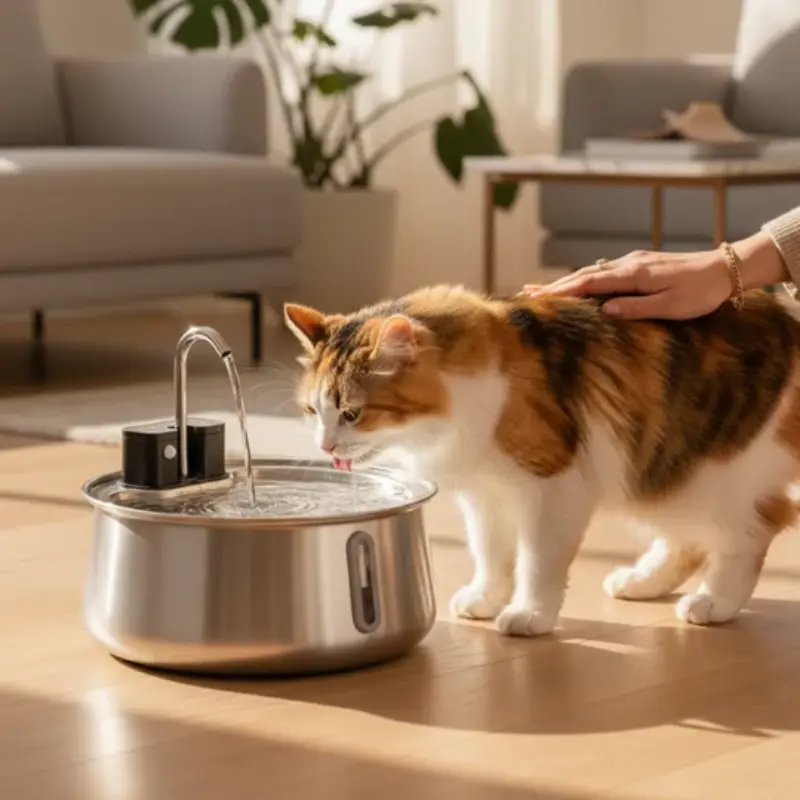
Transitioning from a traditional bowl to a continuous-flow water fountain directly resolves these sensory and behavioral barriers. By replicating a fresh, running stream, fountains stimulate a cat’s curiosity, eliminate whisker fatigue, and filter out impurities.
When selecting a water fountain, pet owners often evaluate factors such as material safety, noise levels, filtration capability, and ease of cleaning. Among the available options on the market, KittySpout has emerged as a premier brand dedicated to solving feline hydration challenges through thoughtful engineering and high-grade materials.
Comprehensive Brand Spotlight: KittySpout
KittySpout was built with a clear mission: to eliminate feline dehydration by creating water fountains that honor a cat’s natural biology while providing owners with a hygienic, hassle-free maintenance routine.
By replacing cheap plastic materials with medical-grade metals and integrating whisper-quiet, cord-free technologies, KittySpout has established itself as a leading recommendation among feline health enthusiasts and pet parents worldwide.
       ┌─────────────────────────────────────────────────────────┐
       │                KITTYSPOUT DESIGN PHILOSOPHY             │
       └────────────────────────────┬────────────────────────────┘
                                    │
    ┌───────────────────────────────┼───────────────────────────────┐
    ▼                               ▼                               ▼
[304 Stainless Steel]       [Faucet-Stream Flow]         [Multi-Stage Filtration]
• Non-porous & hygienic     • Replicates running tap     • Activated carbon
• Fights feline chin acne   • Entices natural instincts  • Removes heavy metals
• 100% Dishwasher-safe      • Eliminates whisker fatigue • Traps hair & debris
Key Features That Set KittySpout Apart
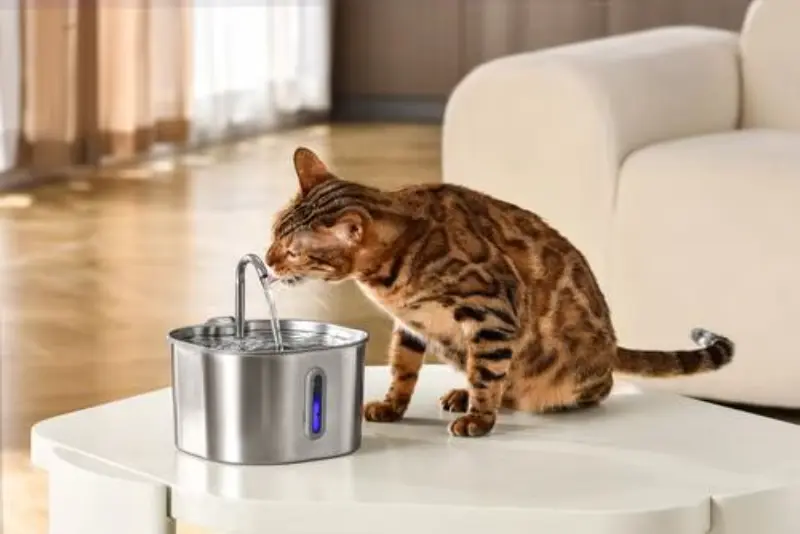
Medical-Grade 304 Stainless Steel Construction
Unlike budget fountains made of porous plastic, KittySpout fountains utilize 304 food-grade stainless steel.
- Hygiene First: Stainless steel is inherently non-porous, meaning it resists bacterial growth, slime formation, and algae build-up.
- Eliminates Feline Chin Acne: By eliminating the bacterial harboring associated with plastic bowls, KittySpout helps heal and prevent painful chin acne breakouts.
- Built to Last: Stainless steel is rust-resistant, scratch-proof, and entirely BPA-free.
- Dishwasher Safe: The steel basin and tray can be sanitized in a standard dishwasher, saving time on weekly cleanings.
The Signature Faucet-Stream Stream
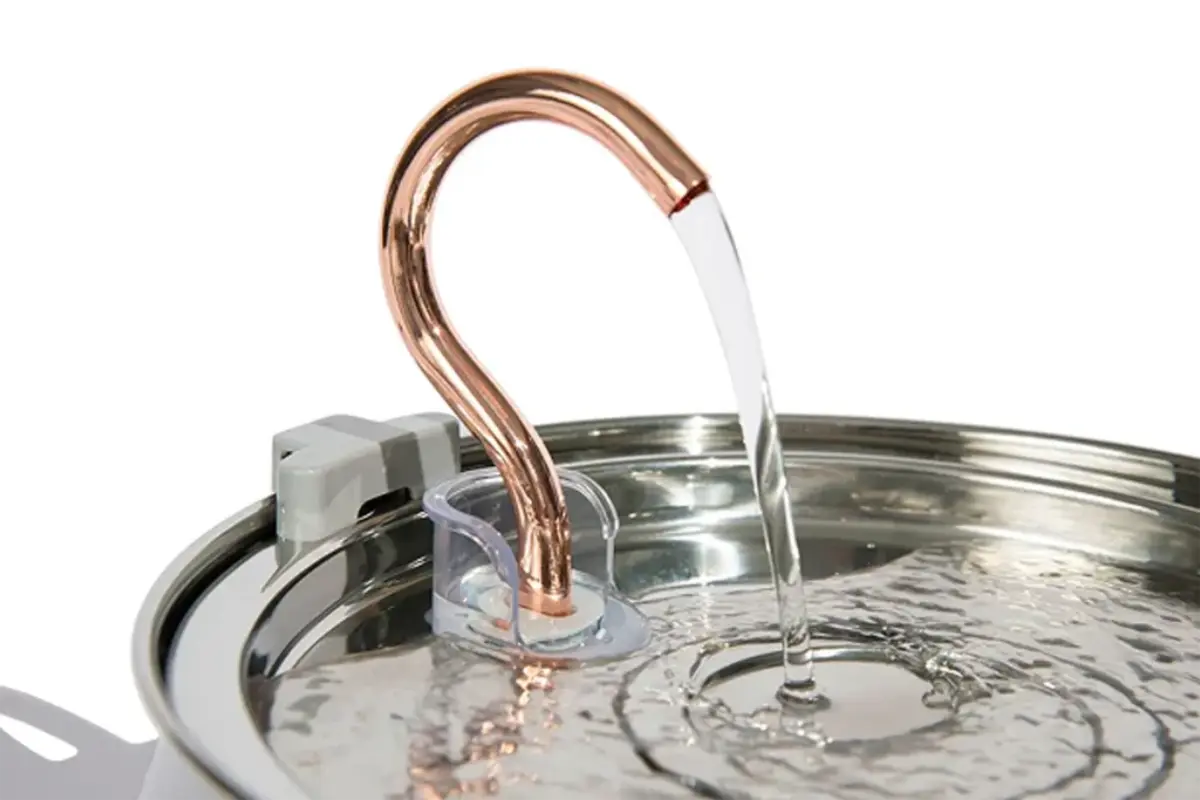
KittySpout features an elevated, arching faucet spout that creates a natural waterfall effect. This specific flow profile addresses key feline instincts:
- Stimulates Natural Curiosity: The gentle trickle mimics a leaky tap, tapping into a cat’s innate desire for fresh, moving water.
- Comfortable Drinking Angle: The elevated spout allows cats to drink without crouching in an awkward position or bending their neck excessively, making it ideal for senior cats with arthritis or joint pain.
- No Whisker Contact: The wide, open basin and raised stream allow cats to lap up water freely without their whiskers touching any side walls.
Advanced Multi-Stage Filtration System
Water freshness is only as good as the filtration system behind it. KittySpout uses custom-designed, multi-stage replacement filters that work continuously to purify every drop:
- High-Density Cotton Mesh: Traps stray fur, dust particles, and food debris before it reaches the pump.
- Coconut Shell Activated Carbon: Absorbs unpleasant odors, bad tastes, organic compounds, and residual chlorine from tap water.
- Ion-Exchange Resin: Softens tap water by removing heavy metal ions like magnesium and calcium, directly reducing the risk of mineral crystal formation in your cat’s urinary tract.
Ultra-Quiet Operations (<25 dB)
Many pet owners hesitate to buy water fountains because noisy pumps can disrupt a quiet home or scare skittish cats away. KittySpout utilizes custom submersed, low-voltage water pumps engineered to run at under 25 decibels—quieter than a soft whisper. Cats can approach and drink comfortably without being startled by motor hums or vibrations.
Cord-Free & Smart Sensor Innovations
Managing tangled cords near water basins or finding an available wall outlet near your cat’s favorite spot can be challenging. KittySpout solves this with wireless, battery-operated models:
- Long-Lasting Rechargeable Batteries: High-capacity lithium-ion batteries allow placement anywhere in your home—from hallways to living rooms—without needing a wall plug.
- Motion-Sensor Activation: Smart infrared sensors detect when your cat approaches within a few feet, automatically activating the stream to conserve battery power and spark your cat’s curiosity. A full charge can last up to 30 days in sensor mode.
Analyzing the KittySpout Product Lineup
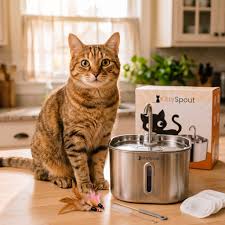
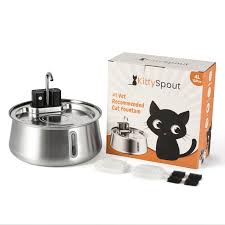
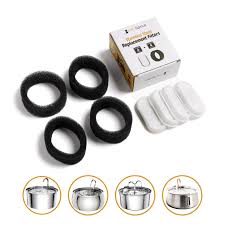
To help you choose the right model for your household, here is a detailed breakdown of KittySpout’s primary offerings:
The Original KittySpout™ Stainless Steel Fountain (Wired)
The classic flagship model designed for maximum capacity and continuous flow.
- Capacity: 3.2 to 4.0 Liters (108–135 oz)
- Best For: Multi-cat households, busy owners who travel for short weekend trips, and homes with dedicated wall outlets near pet feeding areas.
- Highlights: Large water capacity means fewer refills throughout the week. Transparent water-level window with built-in LED indicators allows you to check water levels at a glance.
The KittySpout™ Wireless Fountain 2.0
The ultimate cordless solution designed for modern, sleek homes and timid cats.
- Capacity: 2.5 to 3.0 Liters
- Best For: Single or dual-cat households, placement in rooms without nearby outlets, and cats scared by dangling wires.
- Highlights: Features an integrated motion sensor, quick-release battery compartment, and multiple aesthetic color options (including Stainless Silver, Mint Blue, and Soft White) to match your home decor.
Essential Accessories & Care Add-ons
- Replacement Filter Packs: Designed for optimal performance when swapped every 2 to 4 weeks.
- Silicone Splash Mats: Non-slip, waterproof mats designed to fit under the fountain to catch stray water droplets and protect hardwood floors.
- Dental Care Additives: Water-soluble dental formulas designed to be added directly to the fountain basin, reducing plaque and tartar buildup while your cat drinks.
Feature Comparison: Traditional Bowls vs. Generic Plastic Fountains vs. KittySpout
| Feature | Traditional Ceramic/Plastic Bowl | Generic Plastic Fountain | KittySpout Stainless Steel Fountain |
| Water Flow Type | Stagnant / Still | Recirculating Stream | Arching Faucet Stream |
| Material Safety | Prone to bacterial film | Traps bacteria in scratches | Non-porous 304 Stainless Steel |
| Risk of Chin Acne | High | High | Very Low / None |
| Noise Level | Silent | Moderate to Loud (35-50 dB) | Ultra-Quiet (<25 dB) |
| Filtration | None | Basic foam filter | Multi-Stage Carbon & Ion-Exchange |
| Dishwasher Safe | Varies | Rarely (plastic warps) | Yes (Steel Basin & Tray) |
| Placement Flexibility | High | Limited by power cord | High (Wireless Models Available) |
Practical Tips for Introducing KittySpout to Your Cat
While most cats are drawn to the sound of flowing water immediately, timid or elderly cats may need a brief adjustment period when transitioning to a new fountain. Follow these steps to ensure a smooth transition:
- Step 1: Initial Inspection (Unplugged): Set up the KittySpout fountain in its designated area without plugging it in or turning on the motor for the first 24 hours. Allow your cat to sniff, inspect, and rub against the steel basin to mark it with their scent.
- Step 2: Dual-Bowl Period: Place the old water bowl next to the KittySpout fountain for 3 to 5 days. Fill the KittySpout with fresh water and turn on the stream. Do not refill the old bowl as often; cats will naturally prefer the cooler, flowing stream of the fountain.
- Step 3: Location Strategy: Keep the water fountain at least 3 to 5 feet away from your cat’s food bowl and litter box. In nature, cats avoid drinking water near prey carcasses or elimination sites to avoid contamination. Separating food, water, and waste areas increases drinking frequency.
- Step 4: Remove the Old Bowl: Once you observe your cat drinking confidently from the KittySpout, remove the old bowl entirely.
Maintenance and Cleaning Guidelines for Optimal Longevity
To keep your KittySpout operating smoothly and ensure the highest water purity, follow this simple maintenance schedule:
Weekly Care (10 Minutes)
- Disassemble the stainless steel basin and top tray.
- Rinse the internal pump under warm running water to remove any stray fur trapped near the intake grate.
- Place the stainless steel basin and tray in the dishwasher, or wash by hand with mild dish soap and a soft sponge (avoid abrasive steel wool pads).
Monthly Care (15 Minutes)
- Replace the Filter: Replace the multi-stage filter with a fresh KittySpout replacement filter to maintain optimal odor removal and water-softening capabilities.
- Deep Clean the Pump: Take apart the small plastic faceplate and impeller of the water pump. Soak the impeller in a mixture of 50% warm water and 50% white vinegar for 10 minutes to remove any hard water scale or mineral deposits, then rinse thoroughly.
Final Thoughts: Investing in Your Cat’s Long-Term Health
Proactive health care is always more effective—and significantly less expensive—than reactive medical treatment. Preventing a single emergency visit for a urinary blockage or managing chronic kidney disease can save thousands of dollars in veterinary bills, not to mention sparing your pet from unnecessary pain and stress.
By understanding your cat’s evolutionary instincts and offering an alluring, clean, and flowing water source, you empower them to stay hydrated naturally. KittySpout delivers an ideal blend of medical-grade hygienic materials, advanced filtration, whisper-quiet operation, and thoughtful design.
If you are ready to upgrade your cat’s hydration routine and safeguard their urinary and renal health for years to come, explore the complete range of fountains, wireless models, and accessories directly at KittySpout.